< BACK |
NEXT> |
Ontario Scenery Photo Tour
Ontario Wildlife: Birds

© Leanne Guenther, used with permission
Photo: Bald Eagle
Although the Bald Eagle is the USA's national bird, most of it's breeding grounds are located in Canada, including the entire province of Ontario.
The bald eagle is the only eagle exclusive to North America. They are Canada’s largest bird of prey and have no natural enemies.
Bald eagles choose one mate for life. To impress each other, males and females perform special courtship dances in the sky. This dance involves locking their talons together and cart-wheeling through the air.
When a bald eagle loses a feather on one wing, it will lose a feather on the other in order to keep its balance.
Bald Eagle information and coloring page
Photo: Blue Jay
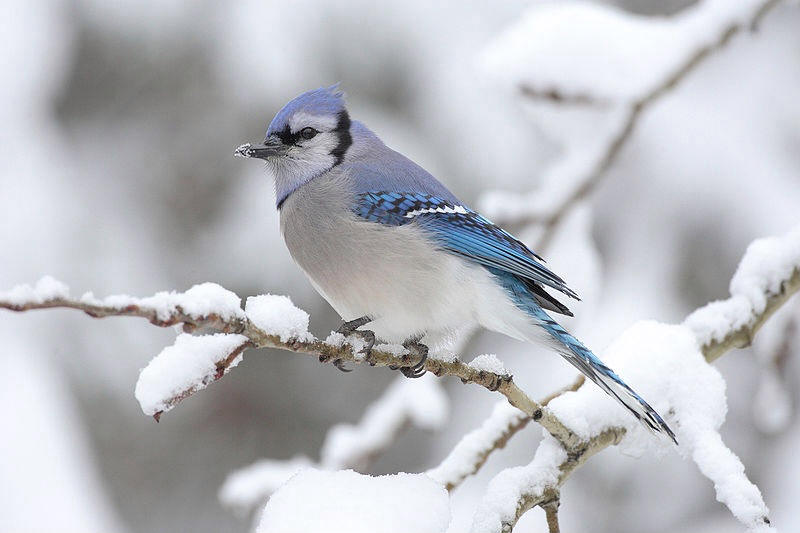
Blue Jays are white and bright blue birds that are native to most of southern Canada. They are only found in North America.
There are actually four different subspecies of Blue Jay with the varieties in Canada tending to have a bit more white than the ones in the US.
The Blue
Jay’s feathers are not actually blue. The bright cobalt colour
is the result of the unique inner structure of the feathers,
which distort the reflection of light off the bird, making it
look blue. Male and female Blue Jays are almost identical in
appearance, although the males are just slightly larger than
females.
Toronto, Ontario's baseball team is named the
"Toronto Blue Jays", after this bird.
Blue Jays nest in
both deciduous and coniferous forests, and are common near
residential areas. They do not, however, appear to like living
in mountain regions.
Blue Jay information and coloring page
 Photo:
Canada Geese
Photo:
Canada Geese
One of my favorite spring and autumn memories ever since my early childhood was hearing the honk of the Canada Geese. I'd peer up at the sky and look for the telltale V-formation of the flock of geese returning to Canada for the summer or leaving for the winter. This spring, I couldn't help but smile when I noticed my daughters straining their necks in search of the geese.
Canada Goose Coloring Page (with information)
more about the Canada Goose >
 Photo:
Great Blue Heron
Photo:
Great Blue Heron
The great
blue heron is the largest heron in North America -- and
they're actually more grey than blue. These
birds are common through most of North America. Most head south once water begins to freeze.
Some fly as far south as Mexico or Cuba.
The great
blue heron is found near bodies of water including
rivers, lakes and oceans as their main diet consists of
fish. They typically nest on small islands near the
water.
Photo: Northern Cardinal

The male northern cardinal is bright red with a cone shaped dark orange bill. The male has a black mask around his beak and eyes. The female is a duller brown-red with a grey mask.
The northern cardinal is a territorial songbird. If a male red cardinal sees his reflection, he will fight for hours to scare off the “other bird” that he sees as a threat.
Northern cardinals live in forests or in thick bushes in southeastern Canada, extending down into central and eastern United States. In Ontario, they are found in the southeastern area near the Great Lakes.
 Photo: Great Northern Loon
The common loon (or Great Northern loon) is Ontario's official bird. It was adopted as the provincial bird in June 23, 1994. It is also the bird pictured on the Canadian $1 coin.
The Common Loon prefers to live in deep water and are found in northern Ontario nesting near the Hudson's Bay coast.
Loons are built for swimming. They are awkward on land and can only take flight from water. Although they lack ability on land, they're terrific in the water -- able to dive up to 70 meters deep in search of fish. Perhaps for this reason, they usually dive under water rather than flying away when they sense danger.
- Common Loon information and coloring page
- Ontario provincial bird with labels worksheet
- Ontario provincial bird coloring page
 Photo: Redheaded
Woodpecker
Photo: Redheaded
Woodpecker
Redheaded woodpeckers mainly eat plants, but they also eat insects, seeds, fruits, berries, nuts, and occasionally even the eggs of other birds.
They nest in a cavity in a dead tree, utility pole, or a dead part of a tree that is between 2 and 25 meters above the ground.
The red-headed woodpecker is listed as a vulnerable species in Canada and as a threatened species in some states in the US. The species has declined in numbers due to habitat loss caused by harvesting of dead trees from forests, agricultural development, the loss of small orchards, and treatment of telephone poles with creosote. They can still be found during breeding season in southern Ontario but have disappeared from most of the other provinces.
 Photo: Snowy Owls
Snowy owls are mainly white
with some black or dark brown markings. Since snowy owls are
found in colder climates, they have a thick layer of down
underneath their many layers of feathers to keep themselves warm
in even the most frigid temperatures.
Snowy owls nest in
the arctic during the time of year when it is daylight for most
of the day. Likely because of this, snowy owls are the only type
of owl that sleep at night and hunt during the day (all other
owls come out at night).
Snowy owls visit every province
of Canada during the winter - they tend to nest and breed
during summer in the more northern areas of the country.
Snowy Owls information and coloring page