
Used with permission. © Robert McDonald
Ruffed Grouse
(Genus, species: Bonasa umbellus)
The most notable characteristic of the Ruffed Grouse isn't how they looks -- it's how they sound. In the spring and a little in the fall, the male ruffed grouse beats the air with his wings to make a loud drumming sound. It's such a deep sound that you feel it more than hear it. He does this to show where his territory is and to attract females.
Another characteristic of this bird is their ability to stay perfectly still if they are threatened. Only when the predator (or unknowing hiker) is within a few feet of the grouse will it leave cover and blast into the air in a flurry of wings.
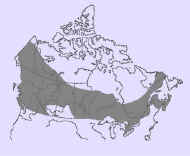
General: Ruffed Grouse live throughout most of Canada all year round. The birds are territorial and typically never leave the approximately 100 hectare (about 240 acre) territory they call home.

Used with permission. © Robert McDonald
Description - male: The Ruffed Grouse is 15 to 19 inches long.
It has a small crest on top of its head with reddish or grey-brown coloring.
The name, Ruffed Grouse, comes from the black 'ruffs' on the side of his neck.
Description - female: same as the male, though the neck ruff and tail band are not as defined.
Description - young: Newly hatched chicks are white to light gray. When immature, the goshawk is a brownish color with pale underparts.
Feeding: Ruffed grouse feed mainly on ground vegetation though they do eat a few insects.
Habitat: Ruffed Grouse are most commonly found in deciduous woodlands (mixed and poplar forests) with dense undergrowth.
The Ruffed Grouse is well adapted to Canadian winters. They have scales on their toes that extend out -- almost like snowshoes. They also nestle themselves in the snow for warmth and to hide from predators.

Used with permission. © Robert McDonald
Nesting: Ruffed grouse nest on the ground, typically in a shallow depression. They rely on camouflage, so you'll often find the nests surrounded by a litter of leaves or nestled near a log, tree or boulders.
The female typically lays a clutch of 9 - 12 buff colored eggs each year. The female (hen) will lay a second time if the first clutch is destroyed by predators early in the year.
The eggs typically take three to four weeks to incubate. The hen does not necessarily build the nest near the male. The hen alone is responsible for building the nest, incubating the eggs and raising the chicks.
The hen leaves the nest to feed in early morning and late evening. She chooses these times because the low sunlight makes it more difficult for predators to find her unprotected nest.
Once the eggs hatch, the female leads them away from the nest within a day. The hen continues to protect her chicks until fall when they are full grown.

Enemies: Natural predators mainly target the young. These predators include the fox, Northern Goshawk and Great Horned Owl.
Migration: Ruffed Grouse do not migrate.
Worksheets and Other Activities:
- Pennsylvania State Bird activity worksheet coloring page
- Ruffed Grouse Coloring Page (from coloring.ws)
- "What I've learned about the Ruffed Grouse" Coloring Worksheet
- Help the Ruffed Grouse find his breakfast Maze
- How many words can you make from Ruffed Grouse Word Worksheet